
Salesforce Commerce Cloud powers online storefronts for thousands of retailers, yet the platform does not ship with a loyalty engine. If you run B2C Commerce, you need to choose between Salesforce’s own loyalty management product and a growing field of third-party loyalty platforms. Each carries distinct integration methods, design trade-offs, and long-term cost profiles.
A loyalty program sitting in a separate data silo from the storefront, the CRM, and the marketing engine fragments the customer view. It limits what you can do with targeting at every touchpoint.
A well-integrated loyalty platform feeds purchase behaviour, reward balances, and tier status into every channel you operate.
This guide covers the leading loyalty platforms that work with Salesforce Commerce Cloud. It walks through native and third-party options, integration methods, and the design factors that separate a durable loyalty setup from one that forces a rebuild within two years. Those factors include MuleSoft wiring, Data Cloud, and Agentforce readiness.
Salesforce Loyalty Management: The Native Option
Salesforce Loyalty Management launched in 2021 as a native app on the Salesforce platform. It shares the same data model, security framework, and automation tools as Sales Cloud, Service Cloud, and Marketing Cloud. That shared base is a structural edge no third-party vendor can match when building loyalty for commerce.
The native link means loyalty events flow through the same platform without middleware or API bridges. Points earned on purchase, tier upgrades on spending thresholds, and reward redemptions at checkout all stay in one place. The data stays within Salesforce, feeding straight into Data Cloud’s unified customer profiles.
How It Works with Commerce Cloud B2C
Salesforce Loyalty Management connects to Commerce Cloud B2C through platform-native APIs and Commerce Cloud integrations. The loyalty engine processes transactions in real time, accruing points and checking tier rules against the unified member profile.
Marketing Cloud Journey Builder then triggers loyalty-specific journeys. Examples: a welcome series when a customer enrols, a re-engagement campaign when points near expiry, or a surprise reward on a member’s anniversary. The whole flow runs natively without custom code or third-party connectors.
The native path does carry constraints. It works best when you already run multiple Salesforce clouds. If you run Commerce Cloud alongside a non-Salesforce CRM or marketing stack, the integration work erodes the native edge.
Pricing Tiers
Cyntexa reports that the Starter tier begins at roughly $20,000 per year. Growth and Advanced tiers scale on transaction volume, member count, and add-on modules.
Factor in build costs too. Those vary with the number of loyalty program rules, the depth of tier structures, and how tightly you need Commerce Cloud wired in.
When to Look Beyond Native
Salesforce Loyalty Management assumes you want to keep loyalty data inside the Salesforce stack. If you run a multi-vendor setup — say, a Salesforce storefront with an SAP ERP, Braze for messaging, and Adobe for analytics — the native option creates lock-in. That may not be a trade-off you want.
Retailers with complex loyalty mechanics may find third-party platforms offer deeper features in those areas. Think coalition programs spanning multiple brands, gamification layers with real-time event processing, or in-store POS links outside Salesforce.
The Salesforce loyalty option is strongest when you have already committed to a full Salesforce stack. It is a weaker fit for mixed setups where loyalty data must flow into non-Salesforce systems.
Third-Party Loyalty Platforms That Integrate with SFCC
The third-party loyalty market has matured. Each vendor below connects to Salesforce Commerce Cloud through one or more methods — SFCC cartridges, REST APIs, AppExchange packages, or iPaaS connectors. Evaluate them against the design criteria that follow.
Antavo
Antavo is an API-first loyalty platform built for omnichannel retail. It connects to Salesforce through AppExchange and REST APIs, handling real-time points accrual, tier management, and reward fulfillment across online and in-store channels.
Its strength lies in complex loyalty mechanics — experiential rewards, gamification challenges, and lifestyle-based earning rules that go beyond transactional points. Pricing starts at roughly $10,000 per year based on member volume. Validate that figure against total cost of ownership during planning.
For teams needing deep Commerce Cloud integration alongside non-Salesforce channels, Antavo’s API-first design offers flexibility the native Salesforce option lacks.
Annex Cloud
Annex Cloud offers a native SFCC cartridge alongside an API path, making it one of the few loyalty platforms with a direct Commerce Cloud connector. It supports transactional, behavioural, emotional, paid, and coalition loyalty models under a single licence.
With over 125 data connectors, Annex Cloud links to Salesforce, SAP, Oracle, and most major marketing platforms — the kind of multi-system wiring that iPaaS wiring simplifies at scale. The vendor targets large retailers with revenue above $250 million.
Annex Cloud is the strongest fit for multi-brand retailers needing a loyalty integration that spans multiple storefronts, regions, and reward currencies under one setup.
Fielo
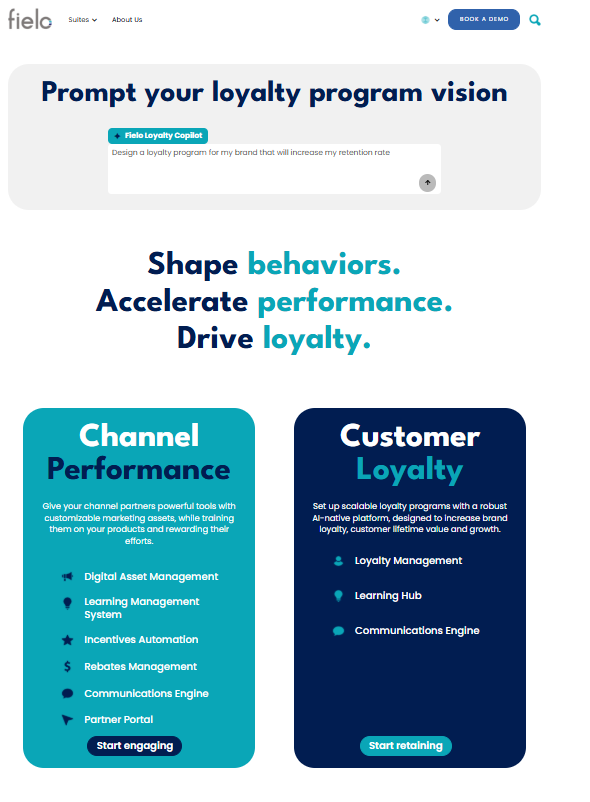
Fielo builds its loyalty engine directly on the Salesforce platform as an AppExchange app. It shares the single-platform data advantage of Salesforce Loyalty Management while offering more granular program design tools for both B2B and B2C use cases.
It supports channel incentive programs, partner loyalty, and consumer rewards under one framework. For Commerce Cloud teams already running multiple Salesforce clouds, Fielo adds loyalty without bringing in a separate vendor’s data model.
Voucherify
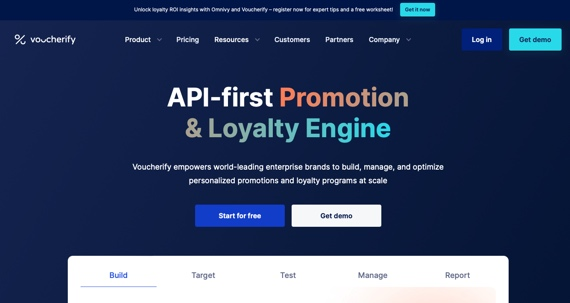
Voucherify is an API-first, composable promotions and loyalty engine. It handles coupon management, referral programs, and rule-based reward distribution — all through RESTful APIs that connect to any commerce platform, including SFCC.
Voucherify’s design suits technical teams who want tight control over loyalty endpoints and prefer to build custom front-end experiences. The trade-off is higher dev overhead than cartridge-based or native Salesforce integrations — a gap that skilled integration engineers can bridge.
For teams building composable setups for their Commerce Cloud integrations, Voucherify provides the building blocks without imposing a fixed loyalty UX.
Open Loyalty
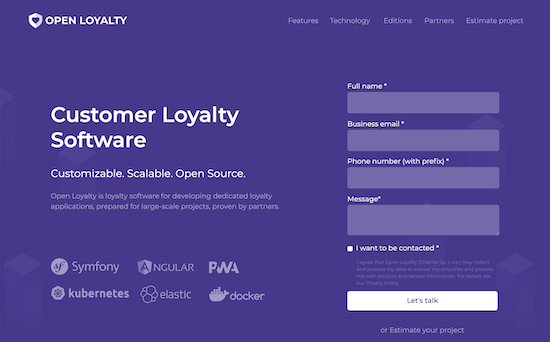
Open Loyalty provides API building blocks for custom loyalty program development. It ships as both SaaS and on-premise. It targets technical teams wanting source-code-level access and full control over the loyalty integration layer.
It connects to SFCC through REST APIs and webhooks. The on-premise option appeals to teams with strict data residency rules that prevent loyalty data from sitting in a third-party cloud.
Yotpo
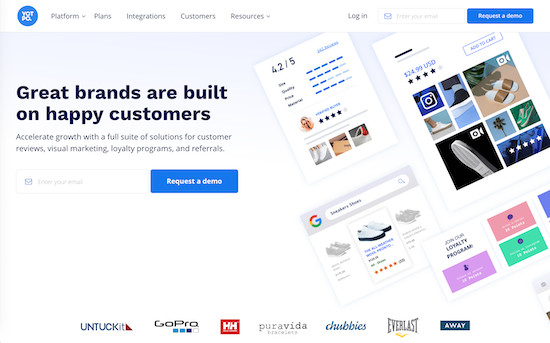
Yotpo bundles loyalty, referral programs, reviews, and user-generated content under one platform. It integrates most deeply with Shopify and Shopify Plus, though REST APIs enable Commerce Cloud links for teams willing to invest in custom work.
Pricing spans a free tier through Pro ($199/month) and Premium ($799/month), making Yotpo the cheapest option. But its native integrations favour the Shopify stack. Full Commerce Cloud parity demands extra development effort.
Talon.One
Talon.One is a headless promotions and loyalty platform built for real-time rule execution. It connects to SFCC through REST APIs and processes loyalty events, coupon checks, and reward calculations at the API layer.
The headless design suits teams pursuing composable commerce, where the loyalty API runs apart from the storefront’s front-end framework. Its real-time rule engine handles complex promotion stacking and loyalty earn-and-burn scenarios without batch delays.
Platform Comparison
All eight loyalty platforms compared across the factors that matter most for Salesforce Commerce Cloud teams:
| Platform | SFCC Integration Method | Architecture | Best For | Pricing Tier |
|---|---|---|---|---|
| Salesforce Loyalty Management | Native (same platform) | Salesforce-native, Customer 360 | Full Salesforce stack enterprises | Starter ~$20K/yr, custom Growth/Advanced |
| Antavo | API + AppExchange | API-first, headless loyalty engine | Omnichannel retail with in-store complexity | Custom enterprise, from ~$10K/yr |
| Annex Cloud | Native SFCC cartridge + API | Modular SaaS, 125+ connectors | Large enterprise ($250M+ rev), multi-brand | Custom enterprise |
| Fielo | Salesforce-native (AppExchange) | Salesforce-native | Salesforce-centric orgs, B2B + B2C | Custom |
| Voucherify | REST API | Composable, API-first | Technical teams wanting composable stack | Custom enterprise |
| Open Loyalty | REST API + webhooks | API building blocks, SaaS or on-prem | Teams wanting source-code access | Custom |
| Yotpo | REST API (Shopify-native) | All-in-one loyalty + reviews + UGC | DTC ecommerce, Shopify-primary | Free → $199 → $799/mo |
| Talon.One | REST API (headless) | Headless promotions + loyalty | Composable commerce, real-time rules | Custom enterprise |
How MuleSoft Orchestrates Loyalty Data Across the Enterprise
Most loyalty platform reviews focus on features and ignore the data layer connecting loyalty data to everything else. For Commerce Cloud teams, MuleSoft fills this role.
A loyalty program creates data that many systems need. The CRM needs member tier status. The marketing engine needs points balances for segmentation. Analytics needs redemption patterns. Finance needs accrual liabilities. Without a central layer, each data flow becomes a point-to-point link that compounds in upkeep costs as you add systems.
API-Led Connectivity for Loyalty Pipelines
MuleSoft’s API-led framework — System APIs, Process APIs, and Experience APIs — provides the structure for loyalty data wiring. System APIs expose raw loyalty data from the platform. Process APIs apply business logic — calculating lifetime value across channels or matching points earned in-store with those earned online. Experience APIs serve tailored loyalty data to each consuming app.
This three-layer approach lets you swap loyalty platforms without rebuilding every downstream link. The Process and Experience API layers stay stable no matter which loyalty platform sits at the System API level.
Agent Fabric and Agentic Loyalty
Salesforce’s Agentforce platform brings in AI agents that query loyalty data, trigger reward actions, and run multi-step workflows without human input. MuleSoft Agent Fabric lets these agents reach loyalty data from any connected system through MCP and A2A connectors.
Agentic readiness matters for any team building loyalty today. A loyalty API with well-documented, tightly permissioned endpoints sets you up for self-running loyalty workflows. Picture an AI agent that spots a high-value customer’s falling engagement, picks the best reward offer, and fires the campaign through Marketing Cloud — no marketer needed.
The MuleSoft layer solves today’s loyalty data wiring and prepares the setup for agentic commerce.
How to Choose the Right Platform
Features matter, but the right choice depends on six design and business criteria you should weigh before committing to any loyalty platform.
Integration Depth
Native SFCC cartridges (like Annex Cloud’s Commerce Cloud connector) install straight into the storefront runtime. API-only integrations need custom development to connect the loyalty platform to checkout and account pages.
Native links cut dev time but limit flexibility. API-first platforms offer more design freedom but demand stronger integration skills from the build team.
Data Unification
Where does loyalty data live, and how does it connect to your broader customer intelligence? Salesforce Loyalty Management and Fielo keep data inside the Salesforce platform, feeding Data Cloud’s unified profiles natively.
Third-party platforms need a data bridge — typically MuleSoft or another iPaaS — to sync loyalty data with Data Cloud. That adds complexity but preserves platform flexibility.
Multi-Region Compliance
If you run loyalty programs across regions, you must address data residency, consent management, and regulatory rules — GDPR in the EU, CCPA in California, PIPEDA in Canada. Each imposes distinct rules on how loyalty data is collected, stored, and processed.
Open Loyalty’s on-premise option and Annex Cloud’s multi-region setup address these needs more directly than SaaS-only platforms. Map compliance needs with a data governance plan before picking a platform.
Total Cost of Ownership
Licence fees are only part of the total cost. Model build costs, ongoing iPaaS licensing for data wiring, custom dev for API-based integrations, and internal engineering time for upkeep.
A structured platform assessment is the most reliable way to model true TCO before committing.
Future-Proofing
The loyalty market keeps moving toward composable, headless designs. Platforms that expose loyalty API endpoints and support event-driven patterns set you up for headless commerce, composable storefronts, and Agentforce integration.
Evaluate whether the platform’s design supports the AI agent strategy you plan to pursue over the next two to three years.
Common Mistakes in Salesforce Commerce Cloud Loyalty Integration
Watch for these patterns — they lead to underperforming loyalty builds.
Picking a platform on feature lists alone. Features do not matter if the integration layer cannot deliver them at scale. A platform with 50 loyalty mechanics sitting in a data silo delivers less value than one with 20 mechanics feeding real-time data into every customer touchpoint.
Treating loyalty data as separate from commerce data. Every loyalty event — a points accrual, a tier upgrade, a reward redemption — should enrich the same unified profile driving product recommendations, email targeting, and service interactions. Splitting them fragments the customer view.
Skipping the data readiness assessment. Duplicate records, mismatched email addresses, and missing consent flags all compound when a new system starts processing against a dirty database.
Skipping the MuleSoft wiring layer for third-party platforms. Direct API wiring becomes brittle as you add systems. The short-term savings erode fast as upkeep costs stack up.
Choosing without comparing native and third-party options side by side. Teams that default to the native option without checking fit — or dismiss it without weighing its Data Cloud advantages — decide on assumption, not analysis.
Evaluation Checklist
Use these questions when evaluating loyalty platforms for Salesforce Commerce Cloud:
- Does the platform offer a native SFCC cartridge, or does integration require custom API work? The answer sets the build timeline and ongoing upkeep burden.
- Can it feed loyalty data into Data Cloud’s unified customer profiles — natively or through MuleSoft — to support targeting across every channel?
- Does it expose well-documented loyalty API endpoints for real-time event processing, or does it rely on batch sync that introduces data lag?
- Can it meet your multi-region compliance needs for loyalty data storage, consent, and member data portability?
- Does the vendor’s design support Agentforce and MuleSoft Agent Fabric, letting AI agents query loyalty data and trigger reward actions on their own?
- Have you modelled total cost of ownership — platform licensing, iPaaS costs, build fees, and ongoing upkeep — rather than comparing licence fees alone?
Incepta Solutions brings certified Salesforce Loyalty Management build experience, plus multi-iPaaS wiring through MuleSoft, Boomi, Workato, and SnapLogic. Incepta’s Loyalty Connect product speeds up Commerce Cloud loyalty integration. The firm’s Forward Deployed Engineering model provides ongoing support beyond go-live. To start, request a platform assessment.
Frequently Asked Questions
What Is Salesforce Loyalty Management and How Does It Work with Commerce Cloud?
Salesforce Loyalty Management is a native loyalty engine on the Salesforce platform. It handles points accrual, tier management, and reward fulfillment using the same data model as Sales Cloud, Service Cloud, and Marketing Cloud. It connects to Commerce Cloud B2C through platform-native APIs, running real-time loyalty events at checkout without middleware.
Do I Need MuleSoft for Loyalty Program Integration with SFCC?
If you run Salesforce Loyalty Management only within the Salesforce stack, MuleSoft adds complexity you do not need. But if you run third-party loyalty platforms or need loyalty data flowing into non-Salesforce systems (SAP, Braze, Adobe), MuleSoft’s API-led framework provides the wiring layer. It prevents point-to-point sprawl.
Which Loyalty Platform Works Best with Salesforce?
It depends on the setup. Salesforce Loyalty Management and Fielo work best for teams committed to the full Salesforce stack. Annex Cloud fits large multi-brand retailers needing a native SFCC cartridge. Antavo suits omnichannel teams with complex in-store needs. Voucherify and Talon.One serve technical teams building composable setups.
How Long Does a Loyalty Platform Integration with Commerce Cloud Take?
A native Salesforce Loyalty Management build typically runs six to twelve weeks from setup through go-live. Third-party integrations using SFCC cartridges take eight to fourteen weeks. API-first integrations without a pre-built cartridge extend to twelve to twenty weeks, depending on loyalty rule complexity and the number of connected systems.
What Is the Difference Between a Loyalty Cartridge and an API Integration?
An SFCC loyalty cartridge installs straight into the Commerce Cloud storefront runtime, processing loyalty events within the Commerce Cloud environment. An API integration connects to an outside loyalty platform through REST endpoints. It needs custom dev for checkout hooks, account pages, and real-time event processing. Cartridges deploy faster; APIs offer more design freedom.
How Does Data Cloud Fit into the Loyalty Setup?
Data Cloud (now Data 360) serves as the unification layer. It combines loyalty member profiles with commerce transactions, service interactions, and marketing engagement data. The unified profile drives targeting across all channels and feeds the AI models that power Agentforce agents. Loyalty data that does not flow into Data Cloud stays siloed from your broader customer intelligence.
Can I Run Multiple Loyalty Programs on Different Commerce Cloud Storefronts?
Salesforce Loyalty Management supports multiple programs under a single instance, each with distinct rules, tiers, and reward currencies. Third-party platforms like Annex Cloud and Antavo also handle multi-program setups. The key design choice: do all programs share a unified member profile, or do they run as separate databases? That choice drives cross-brand reward portability and reporting.
What Is Agentic Loyalty and Why Should Commerce Cloud Teams Care?
Agentic loyalty is the pattern where AI agents manage loyalty workflows on their own — spotting at-risk members, picking the best reward offers, and firing campaigns without human input. Salesforce’s Agentforce platform uses MuleSoft Agent Fabric’s MCP connectors to reach loyalty data across connected systems. If you are building loyalty today, make sure your platform exposes agent-ready APIs.